Two of the greatest sporting events on this planet will come to Beijing in August & September 2008. The most obvious is the Olympic Games, and the lesser known but fastest growing event is the Paralympics.
The Paralympics in Beijing will be held from September 6th to 17th and will feature some 4,000 elite athletes playing 18 sports. It is predicted that close to 2 million spectators will come to the Beijing Paralympic Games over the 10 days of competition.
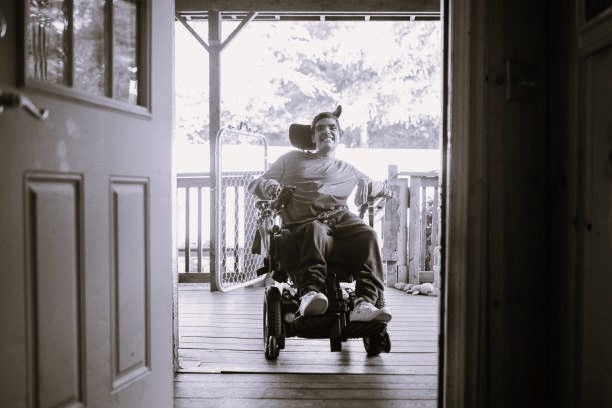
Accessibility is the key requirement of any Paralympic Games to ensure that the athletes, spectators (both international and domestic), media, officials and athletes' family members with disabilities are able to be as much a part of The Games as any other member of the community.
Accessibility accommodates for more than just people with disabilities.
In most countries approximately 20% of the population have some form of disability. However, when you add ever-ageing populations, parents with prams or strollers, couriers, services and emergency personnel, the extent to which an accessible environment can facilitate increased market share cannot be understated.
Accessibility as a Games-related function is still a relatively new concept. In 1995 I approached the Australian Grand Prix Corporation to highlight to them how good planning for the 1996 event would ensure that anyone in need could come to the event. This embraces people with a disability, the elderly, people with illnesses such as cancer as well as those with temporary injuries.
For the Grand Prix, specialised transport had to be worked out, grandstand seating with nearby toilets were incorporated early into designs and corporate and official areas were located within reach. Importantly, Frank Williams, the owner of the Williams Formula One racing team is a quadriplegic and required full access to the main areas along the pit straight.
My business developed even further when I was called upon to assist in the design and development of the venues, transport and operations for the Sydney 2000 Olympics & Paralympics and subsequently the 2006 Melbourne Commonwealth Games.
Accessible Beijing
Beijing Railway Station, Beijing West Railway Station and 55 subway stations now boast accessible facilities.
There are now 780 walkways across the city, spanning 1300km in total length.
There are 2,100 accessible busses already phased into use.
There are 76 accessible passes still to be constructed.
*source BOGOC
This has since led onto consulting work, along with the International Paralympic Committee (IPC), to assist the Beijing Organising Committee of the Olympic and Paralympic Games (BOCOG) in the planning of this year's major Olympic and Paralympic events.
The key components of the consultancy are to establish the notions of "Barrier Free" and "Accessibility" to the Games.
Presenting the concept that accessibility is not just about the Paralympics but also the Olympic Games means ensuring each functional area takes responsibility for accessibility planning.
We must assist venue owners in the accessible design of their new and refurbished venues, encourage transport planners to developing accessible vehicles such as low-floor buses or rear-lift 7-12 seat capacity vehicles, make sure the design of the Athletes Village is handy and a "home away from home" for the 3 weeks of training and competition.
We must also develop and review accessible operations plans that ensure the Paralympic and some Olympic athletes are able to reside, visit and compete at their very best.
Not only has our consultancy helped the new Beijing Capital International Airport become more fully accessible, but we have been instrumental with the dramatic accessibility developments at both the Great Wall of China and the Forbidden City. The hope here is that these changes will become a permanent legacy of the Olympic and Paralympic Games. In Athens for example, a lift installed at the Acropolis as part of the 2004 Olympic Games has since become a permanent and much enjoyed fixture.
China, like nearly every other country in the world has a disjointed history with regards to accessibility. However, what is certain is Beijing's commitment to making the 2008 Olympic and Paralympic Games barrier free. The outcome will be a legacy whereby children will ask "what sport does a paraplegic play?" before they will ask "what is wrong with their legs".
Already cities such as Shanghai are seeing rapid developments in the areas of accessibility, and opportunities for businesses involved in the access industry are increasing. Architects both international and local to China, are all starting to consider and implement great accessibility and innovation into their designs.
Of course it is in every smart corporation's best interests to ensure there are no steps into its shops and that every person can access & enjoy their goods and services without limitation.
There is no doubt that Beijing will host the most accessible Games to date and enjoy the lasting legacy, while showcasing the talents of some of the most committed and determined athletes in the world - the paralympians.

Nick Morris is a member of the International Paralympic Committee and consults for BOGOC. He is a director of Morris Goding Accessibility Consulting, and a director of Accessibility Online.